.webp&w=3840&q=75)
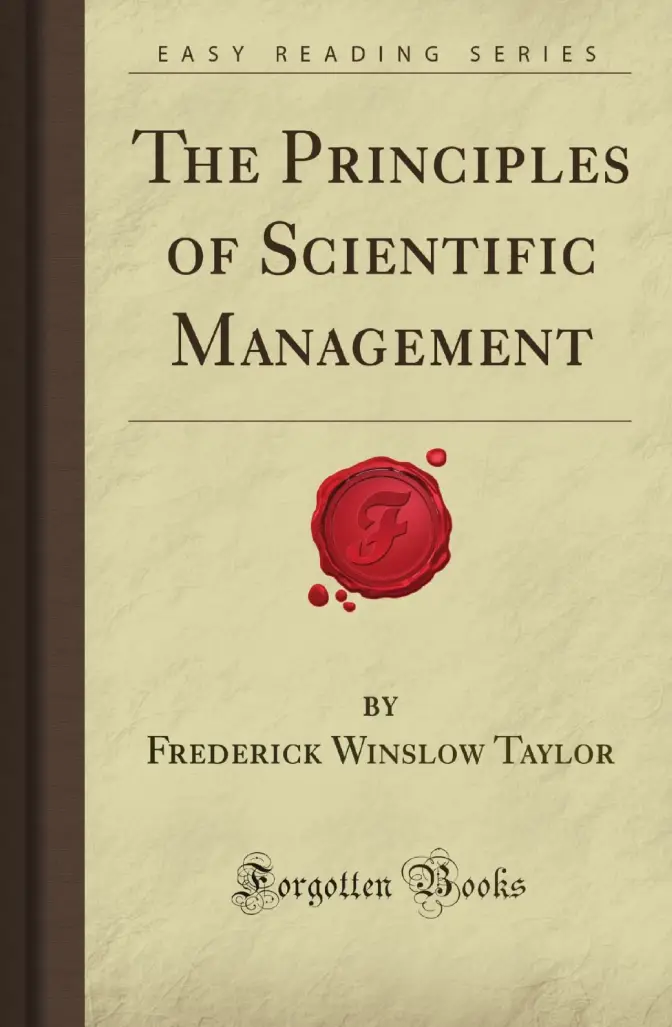 Taylor turned this system upside down. He measured every movement with a stopwatch, standardized every process, and nearly tripled production efficiency. Ford’s assembly line became the most concrete application of this approach in practice.
What Taylor did was seemingly simple: transforming a messy and intuitive order into a measurable and repeatable system. Yet, this wasn’t just an ordinary organizational technique. It was a pivotal step that shaped the economic order of the 20th century.
In the century that followed, the business world faced another transformation. This time, efficiency in large enterprises began to be driven by software systems: ERP.
The Dark Side of Million-Dollar Software
Enterprise Resource Planning (ERP) fundamentally transformed how the world’s largest companies operated in the 1990s. The primary drivers behind this revolution were giants like SAP and Oracle. Finance, accounting, inventory, HR, procurement, customer relations—all these scattered and disconnected business operations were wired into the nerve endings of a single central system.
For large corporations, this system was akin to a biological transformation. Organs that previously operated in isolation now shared a common blood circulation and a central nervous system. When a CEO sat at their desk in the morning, they could see the flow of information through all the company's veins.
But this system suffered from two massive flaws.
First: The Price. Million-dollar SAP or Oracle licenses were more than just a hefty bill; they were an operational shackle. The months spent, the capital drained, and the never-ending consulting cycles required to build these systems created monolithic castles—structures so cumbersome that SMEs couldn't even dream of passing through their gates. For a small law firm, a mid-sized restaurant chain, or a five-person medical clinic, these figures were astronomical.
Second, and perhaps more critical: Complexity. These systems required full-time IT departments, specialist consultants, and implementation projects lasting months. In practice, corporate ERP was a fortress accessible only to the giants.
Consequently, for decades, the business world was split in two. Megacorporations acquired an integrated brain that saw and managed every operation. SMEs, meanwhile, were forced to make do with Excel spreadsheets, isolated accounting software, paper planners, and dozens of non-integrated tools.
On the surface, this divide was merely a matter of efficiency. In reality, it represented a strategic blindness.
Revolution of the Capillaries
Let’s open a parenthesis here and be honest: The real reason for this long introduction isn't just that technology is getting cheaper; it’s that the walls of those monolithic castles are finally crumbling.
"Democratization" sounds a bit too political; what’s actually happening is this: the pointless barriers preventing an SME owner from wielding the same "technological weaponry" as their massive rivals are disappearing. And this democratization isn’t just about "cheaper software." It is something qualitatively new.
The standardization system Taylor built on the factory floor organized the physical labor of the human body. The ERP revolution of the 1990s gathered corporate information and operations under one roof. The fracture we are experiencing today is rapidly pushing us toward a new reality: AI is entering every room under that roof on its own, positioning itself as an autonomous intelligence layer that understands, analyzes, and manages every process.
Think of it as a living organism. Traditional ERP was a framework connecting the spine and major arteries of a large company. It was powerful, but it was deliberate; decisions were still made by humans. With AI integration, this framework transforms into a living system that reaches down to the capillaries. Intelligence begins to permeate every point—flowing from the spine to the furthest cell—detecting even the smallest deviations and saying, "this process has stalled" or "the cost of this resource has increased."
For SMEs, this marks a historical breaking point: For the first time in history, a five-person law firm or a ten-table restaurant can possess the same operational intelligence as its giant competitors.
The New Front of Asymmetric Warfare
Recall Hannibal. The Carthaginian commander crossed the Alps with his elephants to bypass Rome’s flawless naval defenses. His resources were scarce; his numbers were limited. But through asymmetric tactics, he handed one of the history's greatest empires its most crushing defeats.
The landscape SMEs will face in the coming years resembles this asymmetry, but this time, the advantage may tilt in their favor.
While building their ERP systems, large corporations spent decades cultivating institutional memory, process culture, and data accumulation. For SMEs, mimicking this was almost impossible. Now, AI doesn't require that decades-long accumulation; instead, it creates the foundation for equivalent operational intelligence by processing the business’s current data in real-time.
An AI layer that detects an anomaly in an accounting record, spots the exact hour inventory depletion accelerates, or analyzes bottlenecks and missed deadlines in a legal calendar—and reports all of this instantly through a single interface—grants a small business a corporate-level operational vision without the need for complex, million-dollar ERP structures.
That is the ordinary part.
What makes it extraordinary is this: Traditional ERP systems recorded data. New-generation, AI-driven systems read data to feed decision-making processes. This gap between passive recording and active intelligence is as vast as the difference between a nervous system that merely collects data and a brain that actually makes decisions.
Anatomy of the Invisible Manager
So, how will this transformation affect small and medium-sized businesses?
Think of the exhaustion of a lawyer at 10:00 PM, hunting for a critical Supreme Court precedent buried in the fiftieth folder. Traditional ERP "records" that file; but a living system "understands" it for you and places it on your desk before you even ask.
Or imagine a restaurant. Inventory, orders, staff schedules, customer feedback, cash flow, and supplier invoices—in most businesses, these are still kept in separate systems, in separate "silos." Think of the chaos a chef feels in the kitchen, not knowing exactly how long each table has been waiting. What will end that chaos isn't just a program that counts stock; it’s the intelligence that draws the "invisible" link between a supplier's delay and the frown on a customer’s face.
And this structure isn't limited to internal operations. The same layer connects the business's website, e-commerce channels, social media accounts, and email/SMS campaigns to this operational intelligence. A holistic system emerges—one that sees which content converts to sales, which campaigns influence customer behavior, and which digital touchpoints generate revenue.
This is the SME equivalent of what large corporations have been buying for decades. And this capability will rapidly move into the reach of SMEs within the next few years.
The Promise of Integration and Invisible Boundaries
But here is where the real issue crystallizes. The narrative that "AI integrates everything" has become one of the easiest-to-market yet most frequent disappointments in the tech world. The market has turned into a graveyard of startups selling the lie of a "single panel to rule them all." Drizzling a thin layer of "AI sauce" over disconnected software doesn't make that system "smart." It just creates a more quickly reported mess. Unless you build a real "Engine," AI remains nothing more than a chatty assistant that reacts without context.
True operational intelligence is not just a structure that automates processes. It is a system that constantly feeds on the business's own data, understands industry dynamics, and generates decisions not just from raw information, but from contextual meaning. Without this foundation, AI remains a clever-looking interface that fails to grasp the reality of the business.
Making this distinction is vital for SMEs. Because a poorly chosen "integration" tool adds a new layer of isolation rather than solving data silos. The result is not a true transformation, but a fragmented structure masquerading as one—a system where data is merely reported, not where it truly speaks.
.webp)
Taylor's Final Lesson
Frederick Taylor’s least-known observation wasn't a technical finding; it was a human paradox: The vast majority of workers already knew which processes were inefficient. The problem wasn't a lack of information; it was the inability to transform that information into a corporate structure.
The state of SMEs today is no different. Most small business owners intuitively know where their processes stall, where costs bloat, and where time is hemorrhaged. However, for this intuition to become operational intelligence, it requires both a holistic data flow and a system that understands that flow.
This is the fracture that will define the coming era. The operational vision that large corporations built through decade-long ERP investments is now being opened to SMEs through accessible, holistic digital systems powered by an AI layer. And this time, it doesn't require millions of dollars or a full-time IT department.
Taylor taught us how to measure, but in today’s world, measuring isn't enough. Now, the challenge is to avoid drowning in that data and instead transform it into a "nerve system."
In short; Taylor’s stopwatch is no longer in our pockets; it’s beating at the core of our software.
The businesses ready for the future will be those who embrace this transformation the fastest!